
Create moments to see student skill directly: in-class writing, oral defenses, live problem-solving, without or beyond AI. See the Course & Assignment Design page for more on how this move fits into the fuller design picture.
Below are examples from UO faculty.
Nicola Barber (Biology)
 The same jigsaw activity described on the Faculty Examples: Promote Process page ends with each student hand-drawing the full cell-cycle signaling pathway from memory: cyclins, Cdks, and checkpoint regulators, in sequence. She uses Gradescope to efficiently grade handwritten work. The diagram requires genuinely understanding how the pieces connect, not just recalling isolated terms. Professor Barber says, "AI is making our jobs harder. Gradescope can make them easier."
If you want to learn more about Gradescope, visit TEP's How to Use Gradescope page.
Design Moves
- Students reconstruct the complete signaling pathway by hand in class.
- The diagram format itself resists AI: it's a test of whether the student can assemble the pathway correctly, not generate fluent text about it.
- Handwritten diagrams are graded by course leads via Gradescope, letting this kind of check run at scale in a larger course.
See more of Prof. Barber's approach and other examples of how to promote process on the Faculty Examples: Promote Process page.
Arifa Raza-Bayona (Indigenous, Race, and Ethnic Studies)
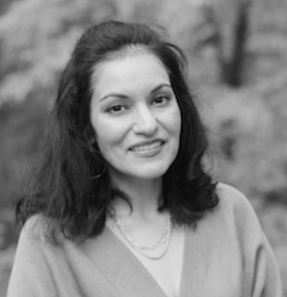 In her ES 352 Race and Criminal Justice course, Professor Raza has students give a final deliverable as a recorded, 10-minute group presentation, audio plus slides, and the rubric grades oral delivery as its own scored criterion, not just content.
Design Moves
- Final product is a recorded oral presentation (audio + slides), a live and spoken format AI can't produce on a student's behalf.
- Rubric scores "Oral Delivery" separately (15 of 120 points), explicitly requiring that all group members speak and that preparation is evident—a graded, individual accountability check inside a group format.
- Requires eight sources minimum, with five specifically from course readings and three tied directly to the local topic (e.g., Oregon Department of Corrections data), verifying that students actually engaged with assigned material, not just generated plausible-sounding citations.
- A separate, individually submitted peer evaluation form adds a second layer of individual accountability on top of the group product.
Chris Sinclair (Mathematics)
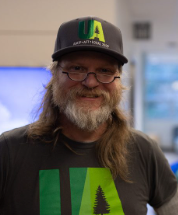 Professor Sinclair uses two separate, genuine skill checks in his six-part "Related Rates with an AI Tutor" calculus project in Math 243: diagnosing someone else's error, and transferring the method to a new problem. (Parts I-III are described on the Faculty Examples: Promote Process page.)
Design Moves
- Part IV presents a fully worked, deliberately flawed AI solution (an error from substituting numeric values before differentiating); students must identify exactly where the reasoning breaks and explain what information was lost, not just flag that the answer is wrong (20 of 100 points).
- Part V is a transfer problem, a different related-rates scenario the student hasn't been tutored through, solved with AI allowed only to critique a diagram and equation, never to solve (20 of 100 points).
- Reconstructing the original solution independently after closing the AI conversation, described on the Faculty Examples: Promote Process page, is itself a direct, unaided check of whether the student actually understood what the tutoring session covered.
- Together, diagnosis, transfer, and independent reconstruction make up 60 of 100 points; the majority of the grade depends on skill demonstrated without AI doing the work.
Have a practice like this to share? If you've redesigned an assignment or adapted a teaching practice in response to GenAI, let us know at tep@uoregon.edu.