Career Preparation Toolkit
Supporting our students in developing the skills and competencies to prepare them for successful careers is vital, and career preparation is one of UO's four Oregon Rising goals. Students need assignments and activities designed to help identify and develop transferrable, career-focused skills.
To support faculty in meeting this student need, and to amplify the excellent work faculty have already done around career preparation, the Career Readiness CAIT, UO Career Center, and Teaching Engagement Program have collaborated to create resources that instructors can use to develop students' career competencies.
Why Career Preparation?
Becoming a leader in career preparation is one of the four Oregon Rising goals at UO. UO has proposed several actions to help achieve this goal, including embedding career-focused transferable skills into curriculum and establishing a common understanding and language across the university when we talk about "career preparation."
"We have a responsibility to our students and families to ensure that our students’ time at the University of Oregon prepares them for the opportunities and challenges of a complex, globally connected world. We will meet this responsibility by increasing connections and experiences for students in ways that more directly prepare them for successful pursuits after graduation." (Oregon Rising)
What are Career Competencies?
The National Association of Colleges and Employers (NACE) identifies key career readiness skills that employers are looking for and that resonate across UO’s Core Education and unit-level goals. These crosscutting competencies are relevant to students across a student's field of study - they are the broad skills that help students start successful careers regardless of their major. Read NACE's definitions of the competencies here; notably, several of the career competencies overlap well with UO's Areas of Inquiry and Cultural Literacy requirements.
- Career and Self Development
- Communication
- Critical Thinking
- Equity and Inclusion
- Leadership
- Professionalism
- Teamwork
- Technology
Tools for Teaching Career Competencies
Instructors teach career competency skills every day. However, for students, these skills are not always nameable and translatable. The goal is for students to be able to 1) name competencies and translate them to new contexts, 2) practice and reflect on their growing competencies and 3) translate their academic uses of the competencies into relevant careers. We can help them by using approaches and tools like those below.
Use shared language and icons
Use "Transparent Design" on Assignments
Provide opportunities for reflection
Students need multiple opportunities to practice, and importantly, reflect on their growing competencies. Instructors can provide metacognitive and reflective activities to help students be able to articulate how they have developed career competencies and which competencies they want to continue to develop.
Example assignments with icons integrated:
Career Readiness CAIT faculty shared transparent assignments they've used to call out career competencies and invite reflection:
- Angela Carter: ANTH Archaeological Dating Techniques (PDF)
- Ashley Walker: HPHY Visual Abstract Assignment (PDF)
- Peg Boulay: ENVS Scientific Poster Assignment (Word)
- Chuck Kalnbach: MGMT Change Management Professional Interviews (Word)
- Damian Radcliffe: Career Skills and Knowledge reflection exercise (PDF)
- Jagdeep Bala: Career competency reflection (Word)
Bring the Career Center into Your Course
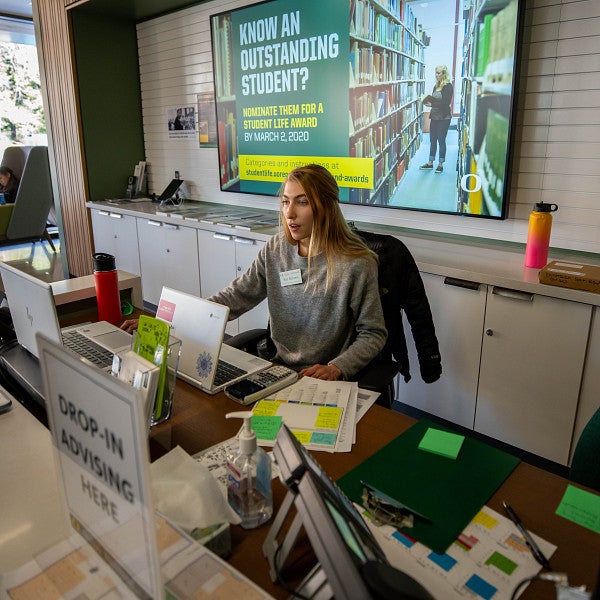
As UO students explore career paths, both academic advisors and career coaches can support them as they consider possible career paths and make decisions about the academic paths to follow. While some students are served by academic and career advisors in the UO professional schools, if students are in doubt, they are welcome to connect with the staff in Tykeson Hall:
- Tykeson academic and career advisors support students learning about UO majors a major and considering how majors can link to possible career paths
- The University Career Center’s career readiness coaches help students to implement career choices as they search for internships/jobs, prepare for interviews, and much more.
The three assignments below are available in Canvas Commons, and once you find the page, you can import it directly into your own course (and modify it if you wish):
- Using Handshake to Locate Jobs or Internships, and Writing an Effective Cover Letter
- Informational Interview Assignment
- Articulate Skills with BigInterview
If you haven't searched for content in Canvas Commons before or need a refresher, learn more on this Canvas Commons page.
Steps Departments Can Take
While UO has numerous opportunities for supporting student career readiness, the students who benefit the most may be the least likely to seek out development opportunities. The best way to ensure every student leaves UO with the career competencies to help them succeed is to build these opportunities directly into the curriculum.
Below are some steps departments can take to help embed career readiness into every student's academic experience. For additional questions or support, contact tep@uoregon.edu.
1: Broaden awareness of career competencies.
Many of the career competencies overlap with the foundation of a liberal arts education and many are likely already taught in your majors. Consider using a department meeting or faculty retreat to broaden your unit's understanding of the career competencies and discuss which are most important for your students and what coursework and experiences in our major are most important for preparing students for careers.
2: Adopt a career-focused learning objective.
Adopting a career-focused learning objective in your major helps move beyond individual course experiences. It supports alignment and coordination of career-focused transferrable skills across the curriculum. Sample outcomes could include:
- Students will be able to identify and communicate their competencies relevant to their future career paths.
- Students will be able to explore career paths and translate how their own skills and interests match a chosen major/career path.
- Students will be able to write professional documents (resume, cover letter, thank you letter, and elevator pitch) to use for jobs, internships and post-graduate program applications.
- Students will develop a mentoring network that provides insights and connections to help them make their career goals a reality.
Adopting a specific career readiness outcomes paves the way for the next steps for your department, mapping how students develop that career competency through the curriculum, and providing an opportunity to assess how well your department is meeting its objective.
3: Map and embed career-focused objectives across existing courses.
- Find out what your department is already doing to develop career ready students. Survey faculty or students to find which competencies are focused on in your curriculum, in which courses, and to what extent. For example, many competencies are practiced in courses but students may not be able to name them or articulate how they are relevant to their careers.
- Build in earlier opportunities for students. Early experiences with career readiness help students prepare for their career journey throughout their UO experience instead of at the end when they prepare to graduate. Embedding career readiness assignments earlier in your major curriculum can help students see the relevance of more courses to their future careers, can help students take advantage of other resources at UO that can help prepare them for their careers, and can help them choose other courses that can develop the skills they want to be successful in their careers. For example
- are there entry-level courses where your unit can embed career relevant assignments and reflections?
- can you have students create a handshake account to explore careers or explore offerings in LinkedIn learning in an existing course?
- Map your curriculum. How do the career readiness experiences students have in your courses build upon each other as students progress through the courses in your major? Are there gaps in which competencies students develop? Use a curriculum mapping process to identify where students are developing competencies and how those experiences may build on each other from one course to the next.
4: Develop new courses.
Some departments have course offerings to help identify and build upon the career competencies developed in their major or to offer credit-bearing courses tied to supporting student learning associated with internships. Consider adding a career-related course if your department does not already have one. For example, the Geography Department offers one example of a career-focused course in "GEOG 419: The Professional Geographer," taught by Dr. Leslie McLees.
5: Assess student career preparation.
Your department can use the annual assessment process to focus on career preparation for your majors. The steps highlighted above are all examples of valuable assessment work that your unit could do embed career preparation experiences into multiple points of your curriculum and could be highlighted in annual assessment reports. The next step of the assessment cycle is to collect more evidence of whether students are meeting the career readiness goals you have set for them. This process could draw from multiple sources including:
- Direct evidence from student coursework: Are there specific assignments where students can demonstrate the goals you have set for them? Examples might include students writing for an external audience, student presentations, or students preparing resumes or other application materials.
- Indirect evidence from student surveys or focus groups asking students which competencies they develop, which are most relevant, and which are missing from their experiences.
- Using existing data sources, such as the Post-Secondary Employment Outcomes (PSEO), which displays earnings outcomes and employment flows for UO graduates compared to other Oregon institutions and from 22 other states.
If your department is interested in focusing on career preparation, contact us at tep@uoregon.edu for support and resources.